
Nutrition
Every meal, counted.
Photograph the plate, scan the barcode, or type three words.
1.3M+
foods, ready to log.
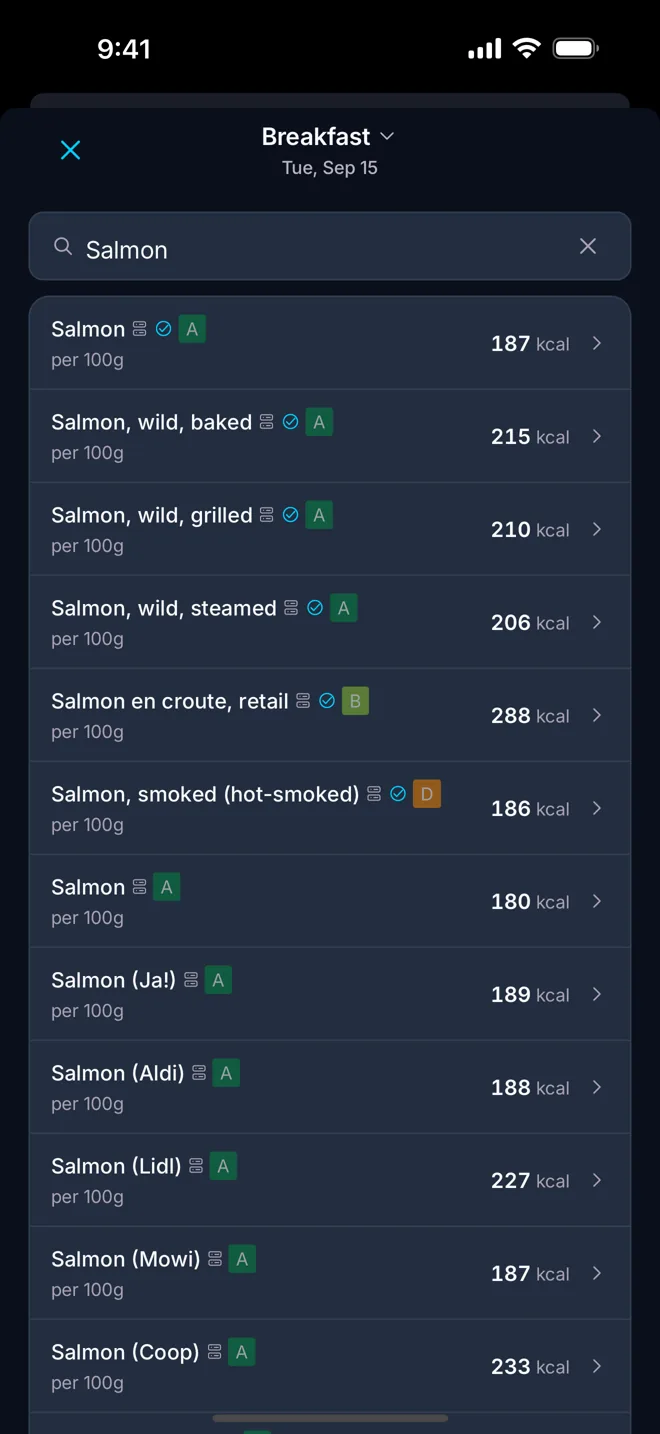
The Open Food Facts mirror covers the products on Swiss, German, French, Austrian and Italian shelves. Generic foods come from USDA.
Point the camera at the plate.
The scan names every item it finds, shows how confident it is, and asks about the oil, butter or sauce you would have left out.
4
national nutrient tables.
German BLS 4.0, French ANSES-CIQUAL, British CoFID and the Swiss Nährwertdatenbank V7.1 — 14,301 curated entries behind the search box.
Barcode scanner
One tap from the diary, straight to the product.
OCR
Nutrition-label scan
Point at the table on the back of the pack.
¼ ½ ¾
Portion picker
Adjust the serving before it lands in the diary.
Recipes
Build one, import one from a link, log it per serving.
+500
Weekly flex days
Spend Saturday's calories from the rest of the week.
Fasting window
Runs as a Live Activity on the Lock Screen.
Nutrition in detail
Everything on this page is in the app today.
A food database built for European shelves
Search runs against a mirror of Open Food Facts holding more than 1.3 million branded products, filtered for the Swiss, German, French, Austrian and Italian markets. That is the half of the diary most apps get wrong: a yoghurt bought in Zurich has different macros from the one sold under the same name in Chicago, and the mirror keeps the European entry.
Generic foods — an apple, chicken breast, cooked rice — resolve against USDA Foundation and SR Legacy data first, because branded look-alikes make a poor stand-in for raw ingredients. On top of that sit four national tables: the German BLS 4.0 with 7,140 entries, the French ANSES-CIQUAL with 3,092, the British CoFID with 2,853 and the Swiss Nährwertdatenbank V7.1 with 1,216. Branded products carry their Nutri-Score badge where one is published.
Anything the database does not have, you can add. A custom food is yours, and can optionally be shared anonymously into the shared database so the next person searching for it finds it already filled in. You decide that per food, and you can opt out.
Three ways to log, none of them typing
The barcode scanner is the fastest route for anything packaged: open the camera from the diary, hold it over the code, and the product arrives with its macros. If the label is there but the barcode is not, the nutrition-label scan reads the table on the back of the pack instead.
For a plate of food, the AI photo scan takes a picture and returns each item it recognises separately, with a confidence mark next to it. You get a portion picker — a quarter, half, three quarters or all of it — before anything is written to the diary, and a prompt asking whether there was oil, butter or a sauce involved, because hidden fat is the single largest source of error in a hand-kept food diary.
The coach is the fourth route. Tell it what you ate in a sentence and it logs the meal for you. Free accounts get a monthly allowance of photo scans and coach messages; the diary, the search and the barcode scanner are unlimited on every plan.
A diary you can actually keep
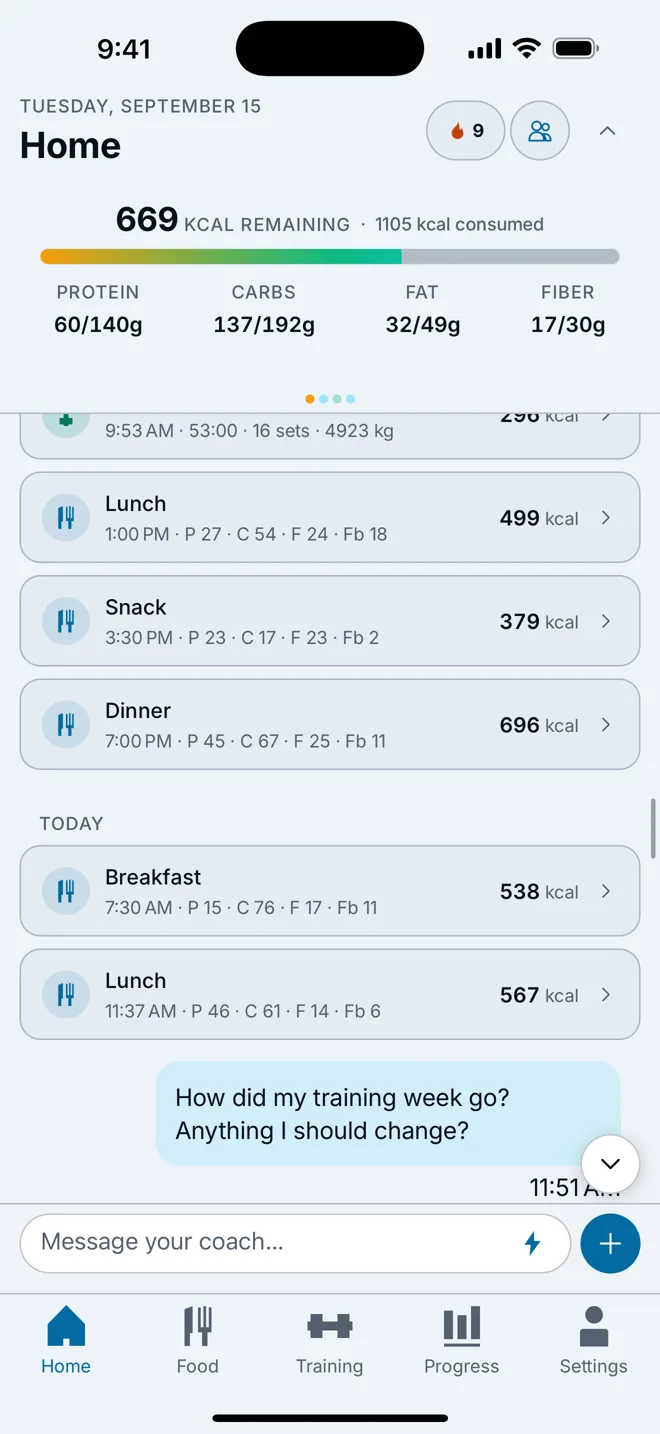
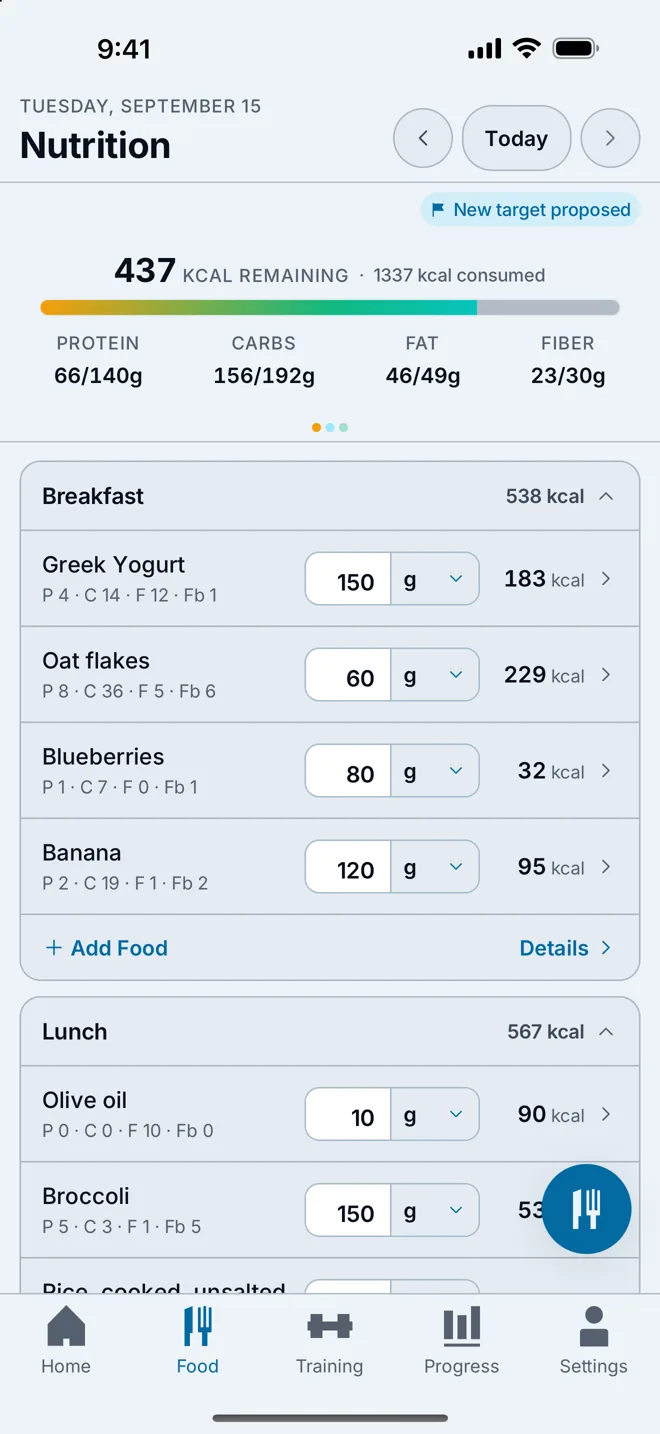
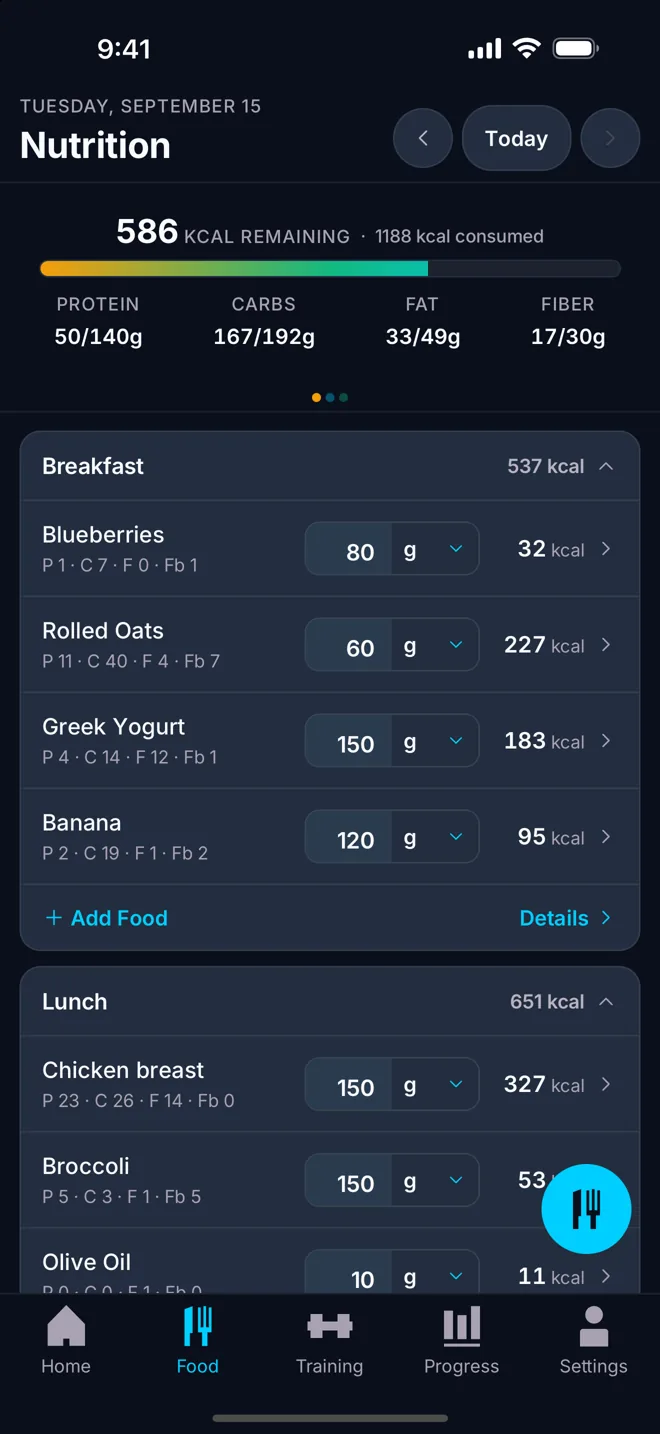
Meals are grouped the way you eat: breakfast, lunch, dinner, snacks, and pre- and post-workout slots for the days that need them. You can copy a whole day or a single meal forward, plan meals ahead of time, and pin favourites so the things you eat every week are one tap away.
Recipes have their own builder. Add the ingredients once, set how many servings it makes, and the per-serving macros are calculated for you; a recipe can also be imported from a web link. Water is tracked from the same screen and written back to Apple Health, alcohol is logged at 7 kcal per gram, and an intermittent-fasting window can run in the background with a Live Activity on the Lock Screen.
Beyond calories and the three macros, the diary shows fibre, sugars, saturated fat, salt, potassium, calcium, iron, cholesterol and vitamins A and C, so a day that hits its protein target but misses everything else does not look like a success.
Targets that move with you
Your calorie and macro targets start from your goal, your weight and your activity level. From there they adapt: the app watches the weight trend against the pace you asked for and proposes a new target when the two drift apart. It proposes — you accept it or keep what you have. Nothing is changed behind your back.
Weekly flex days let you distribute the week's calories unevenly on purpose. Give Saturday an extra 500 kcal and the other six days absorb it, so one planned dinner out is part of the plan instead of a failure. The weekly check summarises the seven days, names the one thing worth changing, and offers a Recalibrate button that folds the result back into your targets.
Fibre has its own target mode, reminders can be set for meals and weigh-ins, and everything is available in kilograms or pounds, kilocalories or kilojoules, metric or imperial, in English, German, French and Italian.